Reviewing Mom Teacher Principal Homeschool Life
As a designer who has spent years translating digital files into tangible thread on fabric, I approach every new machine embroidery design with a mix of curiosity and skepticism. The market is flooded with generic clip art, but finding a piece that balances sentimentality with structural integrity for real-world application is rare. When I first opened the file for Mom Teacher Principal Homeschool Life, I wasn't just looking at a collection of vectors; I was visualizing how this message would translate from a screen to a finished product under the pressure of a stitching machine.
The concept itself is powerful. It speaks directly to the modern educator who wears multiple hats—parent, instructor, administrator, and homeschool guide all rolled into one. This isn't just text; it is an identity statement. For an Etsy seller or a small shop owner targeting teachers, this design hits a specific emotional chord. However, the true test of any Graphics asset is not how it looks in a mockup, but how it behaves when stitched onto textured cotton, heavy fleece, or delicate baby cloth.
First Impressions: Visual Weight and Layout
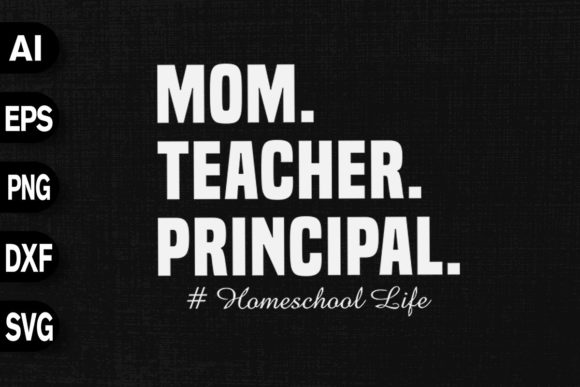
Visually, Mom Teacher Principal Homeschool Life presents a clean, typographic layout. In the realm of T-Shirt Designs, typography often struggles with legibility once converted to stitches. Here, the font choices appear robust enough to hold up against the mechanical nature of embroidery. The layout suggests a balanced composition where no single word overwhelms the others, which is crucial for maintaining readability on smaller items like caps or tote bags.
When I consider the mood, it feels celebratory yet grounded. It avoids the cluttered aesthetic common in many teacher-themed designs. Instead, it offers a bold declaration. For a handmade product line, this clarity is a significant advantage. Customers scanning a booth at a craft fair need to instantly "read" the design before they even touch the item. The visual personality here is confident, making it suitable for both personal gifts and commercial branding for boutique apparel lines.
Real-World Application: From Hoop to Hand
Let's talk about a specific scenario. Imagine you are preparing a custom embroidered tote bag for a local teacher appreciation event. You have a sturdy canvas material, perhaps a cream or navy blue base. You load your embroidery file and set up the hoop. Because the text in Mom Teacher Principal Homeschool Life is substantial, it benefits from a generous hoop size. On a standard 5x7 inch hoop, the design should sit comfortably without requiring excessive trimming or awkward pivoting of the fabric.
Stitching this on a tote bag allows the design to breathe. The flat surface of the bag ensures that the fill stitch areas remain consistent, preventing the puckering that can occur on curved surfaces. Now, contrast this with a sweatshirt. A heavy cotton fleece is forgiving, but the texture can sometimes interfere with fine details. If the design includes thin serifs or delicate connecting lines between words, you must ensure the stitch density is high enough to cover the nap of the fleece but not so dense that it creates a stiff, plastic-like patch on the garment.
I also envision this design as an embroidered patch. Creating patches allows for versatility; you can sew them onto denim jackets, backpacks, or even aprons. In this context, the design acts as a badge of honor. The durability of the patch means the message will last through countless washes, provided the backing is secure. For a craft business selling these as add-ons to existing inventory, the potential for upselling is clear. A simple blank hoodie becomes a personalized gift with the addition of this specific motif.
Navigating Challenges: Fabric and Scale
While the design is versatile, there are scenarios where caution is required. Small hoop sizes are a major consideration. If you attempt to shrink this design significantly to fit a tiny baby hat or a keychain, the letterforms may lose their definition. The spaces between letters could close up during stitching, turning distinct words into a solid block of thread. Always test the design at your intended scale on scrap fabric first.
Fabric texture plays a critical role as well. On thin, stretchy fabrics like jersey knit t-shirts, the tension of the embroidery can cause warping if the correct stabilizer is not used. A tear-away stabilizer might suffice for a quick project, but for a professional finish, a cut-away or water-soluble stabilizer is essential to support the weight of the thread. Additionally, dark fabrics require careful planning regarding thread colors. While white or light-colored thread pops beautifully on black, ensure the contrast is sufficient for the smallest characters in the phrase.
Curved surfaces, such as baseball caps, present another hurdle. The transition from the front panel to the side curves can distort straight text. If you choose to embroider Mom Teacher Principal Homeschool Life on a cap, you may need to adjust the arc of the text or accept a slight distortion. Furthermore, products that undergo frequent washing, like kitchen towels or aprons, demand a design with tight running stitch borders to prevent fraying over time.
Strategic Advice for Designers and Sellers
For those looking to incorporate this design into their business, the focus must be on quality control. Before listing a finished product on your shop, create a printable mockup to visualize the final look, but do not rely on it solely. Physical testing is non-negotiable. Check the thread color contrast in natural light, as artificial lighting can hide issues with visibility.
Inspect the small details closely. Are there any isolated points where the needle might struggle? Is the satine stitch on the outlines smooth, or does it show gaps? These micro-details define the difference between a hobbyist project and a professional offering. Also, verify the licensing terms associated with the digital embroidery file. Ensure you have the right to sell finished goods made with this design, especially if you plan to scale your production for holiday seasons or back-to-school rushes.
Finally, consider the emotional value. This design resonates because it validates the hard work of educators. When you present it as a personalized gift or a piece of custom apparel, you are selling more than just thread and fabric; you are selling recognition. By paying attention to the technical execution—proper hooping, stabilizer choice, and stitch density—you ensure that the sentiment behind Mom Teacher Principal Homeschool Life is delivered with the highest level of craftsmanship.
In conclusion, this design asset holds significant potential for anyone in the commercial embroidery space. It bridges the gap between a heartfelt message and a durable, wearable product. With the right preparation and respect for the materials, it can become a staple in your catalog, appealing to teachers, parents, and supporters everywhere.