Afro Mom, Autism Mom: A Designer's Real-World Review
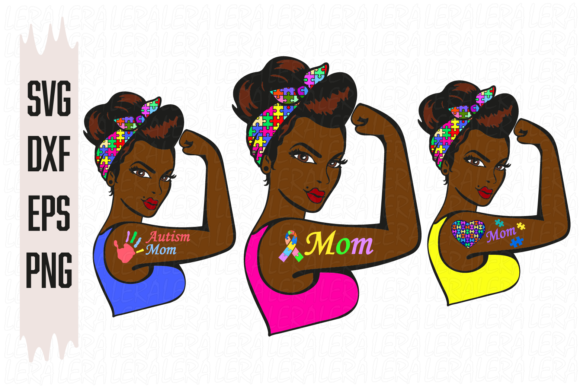
As a professional embroidery designer who has spent years turning digital graphics into tangible, stitched goods, I approach every new Afro Mom, Autism Mom design with a critical eye. It is not enough for an illustration to look good on a screen; it must survive the translation from vector lines to physical thread without losing its soul. When I first opened the zip archive containing these files, my immediate goal was to determine if this graphic could hold up in a real commercial project or if it would fall apart under the scrutiny of a high-end client. The package includes three individual files available in svg, dxf, eps, ai, and png formats, which offers a solid starting point for versatility, but the true test lies in how these shapes translate into a finished product.
The Visual Weight and Emotional Resonance
The first thing that strikes you about the Afro Mom, Autism Mom illustration is its powerful simplicity. In the world of machine embroidery, less often means more, especially when dealing with meaningful themes like motherhood and neurodiversity. The design balances the intricate curves of an afro hairstyle with the recognizable symbolism of autism awareness. This combination creates a mood that is both celebratory and deeply personal. For an Etsy seller or a small shop owner looking to create a personalized gift, this visual personality is exactly what drives engagement. It speaks directly to a specific community, offering representation that feels authentic rather than generic.
However, the transition from a static graphic to a dynamic embroidery file requires careful planning. The layout suggests a design that works best as a focal point rather than a subtle accent. If you are considering this for custom apparel, such as a sweatshirt or a tote bag, the bold lines need to be respected. The design assets provided in the Illustrations category are clean, but they lack the inherent stitch direction data found in native PES or DST files. This means you will need to digitize or convert them carefully to ensure the satin stitch and fill stitch areas do not clash or pucker.
Real-Life Application: The Custom Tote Bag Scenario
To truly evaluate the utility of Afro Mom, Autism Mom, imagine a specific scenario: a client wants a set of 50 embroidered tote bags for a local support group event. You load the design onto your machine, hooping a sturdy canvas tote. Here is where the practical reality sets in. The curves of the hair in the illustration are beautiful, but on a textured fabric like canvas, tight curves can sometimes cause thread bunching if the stitch density is too high. Because this is a digital graphic intended for invitations and printables originally, you must verify that the line weights are thick enough to hold up during stitching.
In this hypothetical project, the design shines when placed on a neutral background, allowing the thread colors to pop. If you were to use this on a dark fabric, you would need to ensure there is a backing layer or a dense fill stitch behind the main elements to prevent the fabric color from bleeding through. The emotional impact of the finished product is significant; customers holding a bag with this design feel seen and valued. That level of connection is what elevates a simple handmade product into a cherished keepsake. However, the success relies entirely on your ability to manage the technical execution of the machine embroidery design.
Navigating Fabric Challenges and Hoop Limitations
While the concept is strong, there are specific situations where you must exercise caution. Small hoop sizes are a major concern with designs that feature detailed facial features or complex hair textures. If you attempt to fit the full Afro Mom, Autism Mom image into a 4x4 inch hoop, you risk compressing the details until they become indistinguishable blobs of thread. Always check the dimensions against your hoop size before committing to a run. Similarly, stretchy fabrics like jersey knit can distort the design if the stabilizer is not heavy-duty enough. The tension required to pull the needle through the loops of the fabric might warp the straight lines of the text or the edges of the ribbon symbol.
Textured fabrics also present a challenge. On a nubby wool sweater or a thick fleece blanket, the fine details of the face might get lost in the pile of the fabric. In these cases, consider simplifying the design or using an applique technique where the base shape is cut from felt and stitched down, rather than relying solely on thread. This approach ensures clarity and durability, which is crucial for products that will be washed frequently, such as baby clothes or kitchen towels. Remember, a design that looks perfect on a flat mockup might struggle on a curved surface like a cap. The topography of a hat brim can cause registration issues, so testing on scrap fabric is non-negotiable.
Professional Standards and Commercial Viability
For creative entrepreneurs and digital product sellers, the value of Afro Mom, Autism Mom extends beyond aesthetics to brand consistency and customer trust. When you sell a finished product, you are selling a promise of quality. If the stitching is sloppy or the design is misaligned, it reflects poorly on your entire craft business. Using high-quality design assets like these helps maintain a professional presentation, but only if you take the time to prepare them correctly. Check the thread colors to ensure they contrast well with the garment. A light blue ribbon on a white shirt might disappear, while a vibrant gold or teal could make the statement loud and clear.
Furthermore, as an Etsy seller or boutique owner, you must confirm the licensing terms before selling finished items. While the product description mentions the files are packed in a zip archive and include various formats, it does not explicitly detail commercial rights for the converted embroidery versions. Always review the license agreement to avoid legal pitfalls. If you plan to sell the digital embroidery file itself, ensure you have the right to redistribute or modify the source material. Transparency builds buyer engagement and protects your reputation in the handmade community.
Final Thoughts for the Embroidery Artist
In conclusion, the Afro Mom, Autism Mom graphic is a compelling piece of art that holds great potential for meaningful projects. Its strength lies in its ability to convey a powerful message through a recognizable visual language. However, its success in an embroidery context depends on your technical skill and attention to detail. Test the design on scrap fabric first, experiment with different stabilizers, and always visualize the final result on the actual product you intend to sell. Whether you are creating a holiday gift, a nursery decor item, or a small shop merchandise line, taking the time to refine the stitch count and placement will ensure that the final result honors the intent of the design. By treating these graphics with the respect they deserve, you transform simple clipart into a lasting, tactile tribute to the mothers who inspire us all.